
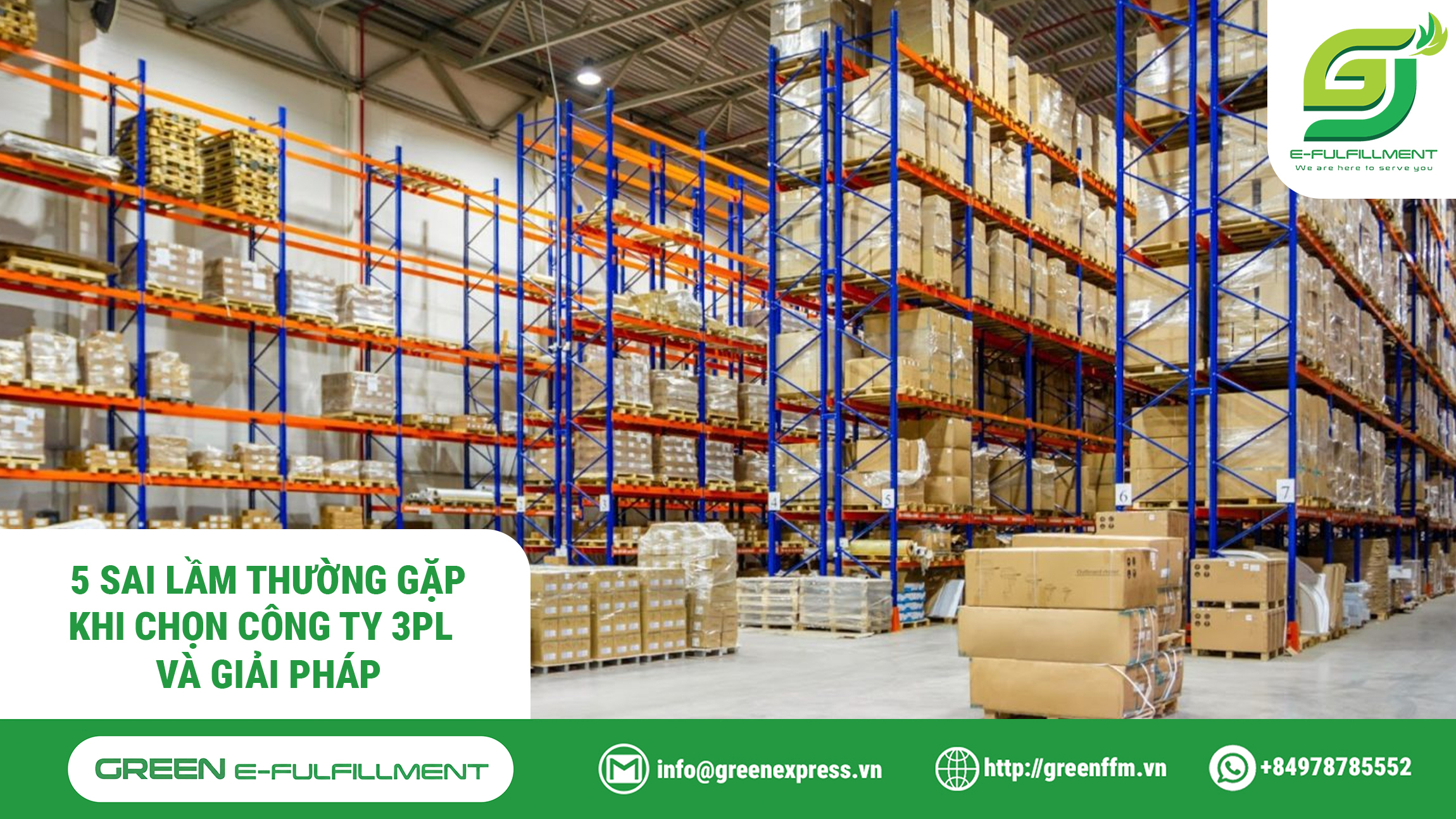
5 Common Mistakes When Choosing a 3PL Company and Solutions
1. Misjudging Operational Needs
One of the biggest mistakes businesses make when choosing a 3PL partner is failing to clearly define their needs and expectations from the start. This often results in mismatched capabilities, conflicts, and even the need to switch providers — disrupting operations and damaging customer experience.
Today, there are dozens of reputable 3PL providers in Vietnam, each with unique strengths. In reality, there’s no “best” 3PL for everyone — only the one that best fits a company’s specific operational model and goals.
Assess your needs before partnering with a 3PL provider
To choose the right one, sellers should clarify key criteria such as:
-
Average and peak order volume (daily and during sales campaigns).
-
Required fulfillment speed (same-day packing, 2-hour, or 4-hour delivery, etc.).
-
Product characteristics (fragile items, temperature-sensitive goods, short shelf life, etc.).
-
Additional services (custom branding, reporting, analytics, etc.).
-
Scalability as the business grows.
Sellers should also prioritize 3PLs experienced in managing similar product categories. Once you fully understand your operational needs, finding a long-term, compatible 3PL partner becomes much easier.
2. Choosing a Fulfillment Partner Based Solely on “Low Price”
Many businesses make the mistake of choosing a 3PL provider simply because it offers the lowest price. While this might reduce short-term operating costs, it often leads to serious long-term risks.
Why “cheap” can be costly:
-
Poor infrastructure and manual operations with little to no technological support.
-
High error rates in inventory management and order processing.
-
Slow deliveries that fail to meet platform SLAs, leading to penalties and lower product visibility.
-
Hidden costs such as return handling, damage compensation, or complaint resolution.
-
Negative impact on brand reputation and customer retention.
Price is important — but it should never be the only deciding factor. Sellers should evaluate total value, including:
-
Operational capability and technology platform.
-
Transparent service quality commitments.
-
Flexibility and responsiveness of the operations team.
Balancing cost and quality helps businesses save in the long run, maintain stability, and minimize risks.
👉 Read more: What’s the difference between 3PL, 1PL, 2PL, 4PL, and 5PL?
3. Lack of Clear Contractual Terms
Another common mistake when working with a 3PL provider is relying on verbal agreements or general quotations without clear contractual terms. The clearer and more detailed the contract, the smoother the partnership. Without it, disputes, blame-shifting, and accountability gaps are inevitable.
For example:
-
When an order is delayed, damaged, or lost, there’s no legal basis to request compensation.
-
Extra fees (for storage, returns, or high-season logistics) may arise unexpectedly, exceeding initial cost estimates.
To avoid these issues, ensure your contract includes:
-
Transparent pricing structure for all potential fees (storage, peak-season surcharges, return processing, packaging materials, etc.).
-
Service-level commitments (SLA) and acceptable error rates.
-
Complaint-handling and compensation procedures for damaged or lost goods.
-
Payment and reporting timelines, such as COD settlements and periodic reports.
-
System access permissions to monitor real-time inventory and order status for transparency.
If possible, start with a short-term pilot contract before signing a long-term one. A clear, detailed agreement builds trust and fosters a sustainable partnership.
4. Overlooking the End-Customer Experience
Many businesses focus solely on costs, logistics efficiency, and internal gains — forgetting that customer experience is the ultimate measure of success.
A reliable 3PL should enhance both seller efficiency and buyer satisfaction. Common issues include: poorly packaged items, missing gifts, non-branded packaging, or inconsistent presentation across channels.
When choosing a 3PL, prioritize partners with:
-
Professional and consistent packaging standards for all orders.
-
Custom branding options such as logo printing, gift wrapping, vouchers, and thank-you notes.
-
Technology-enabled quality control — barcode scanning, CCTV monitoring during packaging, etc.
-
Responsive customer service to resolve issues promptly before customers complain.
A trusted 3PL should act as your brand representative, not just a logistics provider — ensuring your customers always receive a satisfying and consistent brand experience.
5. Failing to Regularly Evaluate Performance
Many businesses assume that once a contract is signed, the 3PL partner will automatically meet expectations. Without ongoing performance tracking, however, issues can go unnoticed until they cause real damage.
As a result, sellers often lack insight into whether service levels match contractual terms, leading to cost discrepancies, inefficiencies, and missed opportunities for improvement.
Businesses should require their 3PL partners to:
-
Provide regular performance reports (weekly, monthly, quarterly) covering SLA rates, error ratios, return causes, and cost metrics.
-
Offer real-time operational dashboards for transparent, accurate monitoring.
-
Proactively suggest improvements when inefficiencies or risks are detected.
These are the most common mistakes businesses make when selecting a 3PL provider. Avoiding them will help ensure smoother operations, stronger partnerships, and better customer satisfaction.
👉 Read more: 5 key considerations for choosing a reliable 3PL partner
N&H Fulfillment Centers
-
An Phu Dong Fulfillment Warehouse:
An Phu Dong 13 Street, An Phu Dong Ward, Ho Chi Minh City, Vietnam. -
Long Bien Fulfillment Warehouse:
No. 1 Huynh Tan Phat Street, Sai Dong B Industrial Zone, Long Bien District, Hanoi, Vietnam.
📞 Contact N&H Fulfillment today for detailed consultation and tailored logistics solutions.
 EN
EN  VI
VI